It’s a frustratingly common feeling. You spend an hour crafting the perfect social media post for your small business. You find the right image, write a clever caption, and hit ‘Publish’. And then… crickets. A few likes, maybe from your mum and a loyal friend, but no comments, no shares, no clicks. It feels like you’re shouting into an empty room. This experience is so universal that many business owners conclude social media just doesn’t work for them. I’ve found the issue is rarely the platform; it’s the lack of preparation and the requirement to have a strong social media strategy.
Before posting anything on social media, a small business must complete a strategic checklist. This process involves defining clear goals, deeply understanding the target audience, choosing the right platforms, establishing a brand voice, and creating a content plan. This preparation turns random acts of posting into a cohesive and effective marketing strategy that drives real business results.
How to use this checklist
Think of this checklist not as more work, but as the work that makes everything else easier. This is the foundational strategy you build once and refine quarterly or yearly. Going through these 20 steps methodically before you launch (or re-launch) your social media presence will save you countless hours of guesswork down the line. It ensures every post you create has a purpose, a place, and a pre-defined path to success. Grab a coffee, open a new document, and let’s build a plan that works.
The 20-point social media strategy checklist
I’ve broken the checklist into four distinct phases: foundation, setup, content, and process. Work through them in order to build your strategy on solid ground.
Phase 1: foundation & goals (items 1-5)
- Define your business goal: Why are you really on social media? It’s not just ‘to be on social media’. Is the primary goal to generate leads? Increase brand awareness? Build a community around your product? Drive traffic to your website? Be brutally honest and choose one primary goal to start.
- Set SMART social media objectives: Translate your business goal into a measurable objective. Instead of ‘increase brand awareness’, try ‘Increase our post reach by 20% and follower count by 100 new, relevant accounts this quarter’. This makes your goal Specific, Measurable, Achievable, Relevant, and Time-bound.
- Identify your target audience: Who are you trying to talk to? Go deeper than ‘women, 25-40’. What are their daily frustrations? What other brands do they love? What kind of content do they share? What problems does your business solve for them? Create a simple persona to keep in mind with every post.
- Conduct a competitive analysis: Look at 3-5 competitors or similar brands. What platforms are they on? What type of content gets the most engagement for them? What is their tone of voice? Note their strengths and, more importantly, identify gaps in their strategy that you can fill.
- Perform a social media audit: What’s your starting point? List all existing social media accounts (even old, inactive ones), your current follower counts, and your most successful posts to date. This gives you a baseline to measure growth against.
Phase 2: platform & profile setup (items 6-10)
Once you know your ‘why’ and ‘who’, you can focus on the ‘where’ and ‘how’.
- Choose the right platforms: Don’t just sign up for everything. Based on your audience research, where do your people actually spend their time? It’s better to be a star on one or two relevant platforms than to be mediocre on five. If your audience is B2B professionals, LinkedIn is key. If you’re a visual brand, Instagram and Pinterest are your playground.
- Optimise your profiles: Your profile is your digital storefront. Ensure your username/handle is consistent across platforms. Your bio should clearly state who you are, what you do, and who you help. Most importantly, include a clear call to action and a link.
- Establish your brand voice & tone: How do you want to sound? Are you the professional expert, the witty friend, the supportive mentor? Define 3-4 adjectives for your voice (e.g., ‘helpful, professional, direct’) and stick to them. This consistency builds brand recognition.
- Create visual identity guidelines: Your feed should be instantly recognizable. Decide on a consistent colour palette, font style, and logo usage. This doesn’t mean every post looks identical, but they should feel like they’re from the same family.
- Set up a link-in-bio tool: Platforms like Instagram only give you one link. Use a tool like Linktree or Beacons to turn that single link into a mini-landing page that directs traffic to your blog, services, and latest offers.
Pro tip: Don’t skip the voice and visual steps. In a sea of content, consistency is what makes you memorable. It’s the silent signal that tells your audience, “You’re in the right place.”
Phase 3: content strategy (items 11-15)
Now we get to the ‘what’. This is where you plan the actual content you’ll be sharing.
- Define your content pillars: You can’t talk about everything. Choose 3-5 core topics or ‘pillars’ that are relevant to your audience and your business. For a marketing agency, these might be SEO, Social Media Strategy, and Content Writing. Every post should fit under one of these pillars.
- Determine your content mix: Don’t just sell. A good rule of thumb is the 80/20 rule: 80% of your content should be helpful, educational, or entertaining for your audience, and only 20% should be directly promotional.
- Brainstorm initial post ideas: Based on your pillars and audience pain points, create a running list of at least 20-30 post ideas. What questions do your customers always ask? Turn each one into a post. You can use AI for inspiration here, but the core strategy must be human-led; it’s a topic blogaweso.me covers well when discussing AI’s role in content.
- Plan your posting cadence: How often will you post? Be realistic. Consistency is more important than frequency. It’s better to post three high-quality posts per week, every week, than to post twice a day for a week and then disappear for a month.
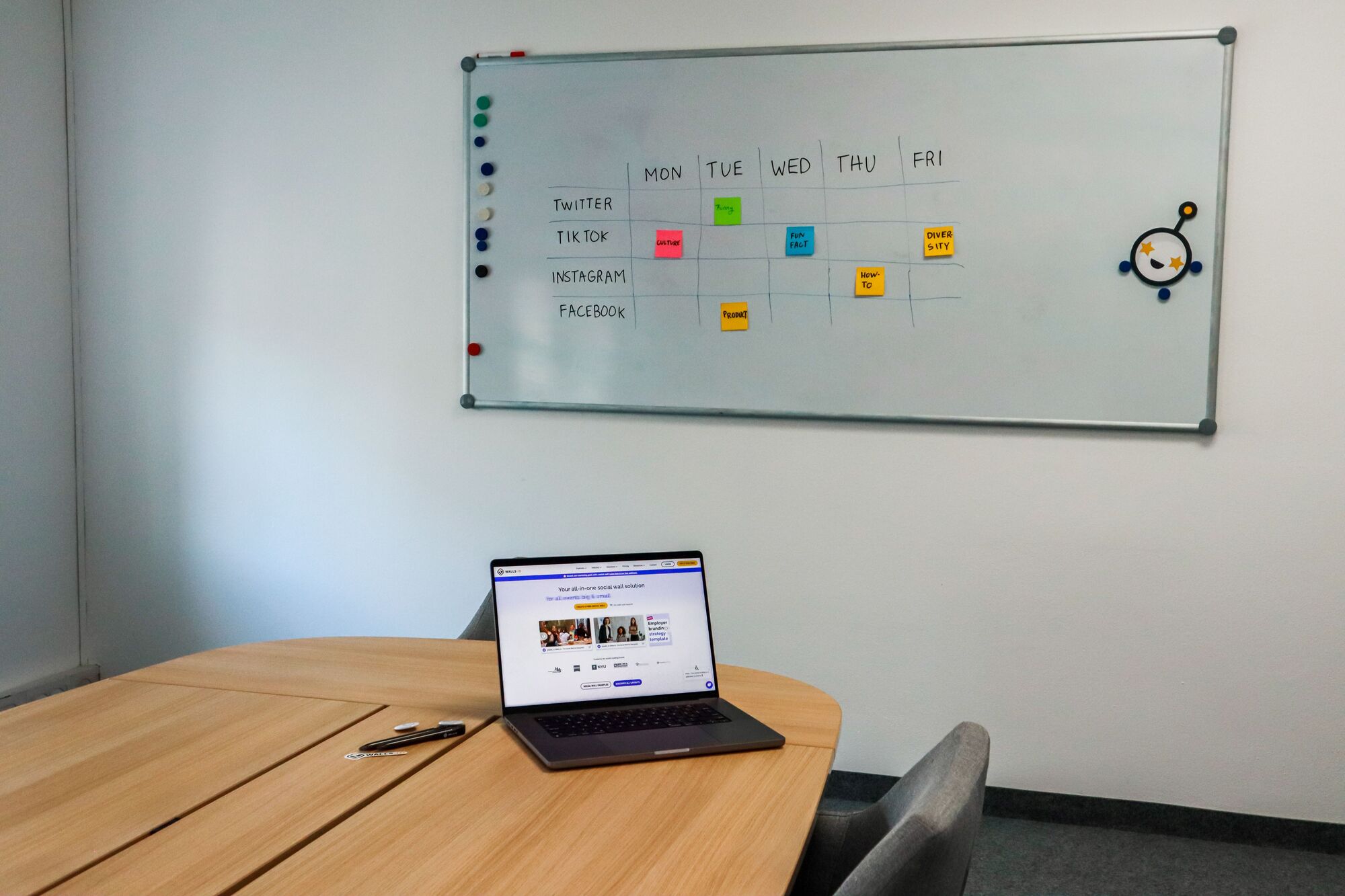
- Create a simple content calendar: This doesn’t need to be fancy. A simple spreadsheet with columns for ‘Date’, ‘Platform’, ‘Pillar’, ‘Content’, and ‘Status’ is a perfect start. This is your roadmap.
Phase 4: process & measurement (items 16-20)
Finally, you need a plan for managing the process and knowing if any of this is actually working.
- Establish an engagement strategy: Social media is a two-way street. How will you respond to comments and DMs? How quickly? Dedicate time each day to engage with your community, not just post and run.
- Define key performance indicators (KPIs): Based on your goals (from Step 1), which metrics matter? If your goal is brand awareness, track Reach and Impressions. If it’s lead generation, track Clicks and Form Fills. Don’t get lost in vanity metrics like ‘Likes’ and overall post engagement stats.
- Set up analytics tracking: Learn how to use the native analytics tools within each platform (e.g., Meta Business Suite, LinkedIn Analytics). Schedule a monthly check-in to see what’s working and what’s not.
- Allocate resources: Who is ultimately responsible for executing this plan? What is the budget for tools or potential paid advertising? Define this upfront to ensure accountability and sustainability. This is often where small businesses falter, and where a partner can step in. If this feels overwhelming, remember that this strategic work is exactly what services like mine at MisalMarketing are built to handle.
- Review and refine regularly: This checklist isn’t static. Set a recurring calendar appointment (I recommend quarterly) to review your strategy, check your KPIs, and make adjustments. The digital landscape changes fast, and your strategy needs to be agile.
Where it goes wrong: common mistakes to avoid
Even with a solid social media strategy laid out in front of you, it’s easy to fall into old habits. After eight years in this industry, I see the same few mistakes trip up small businesses time and again. Watch out for these:
- Posting without purpose: Every single post must align with a content pillar and a business goal. If it doesn’t, don’t post it.
- The ‘me-me-me’ feed: If your feed is just a series of sales pitches, you’ll lose your audience fast. Remember the 80/20 rule and focus on providing value first.
- Being a ghost town: Don’t ignore comments, questions, and DMs. Engagement is the currency of social media. Responding shows you care and that there’s a real human behind the brand.
- Spreading yourself too thin: It’s tempting to be on TikTok, Instagram, Facebook, LinkedIn, and Pinterest. But if you can’t create quality, native content for each one, you’re better off dominating just one or two.
- Inconsistent branding: Using different logos, colours, and a different tone of voice across platforms confuses your audience and dilutes your brand. Consistency builds trust.
Putting your social media strategy into practice
Working through this checklist is an investment of time upfront, but it’s the single most effective way to turn your social media from a time-consuming chore into a predictable, lead-generating asset for your business. It provides clarity and a framework for action, which is something every time-poor business owner needs. The next time you sit down to post, you won’t be staring at a blank screen; you’ll be executing a plan.
- Clarity on goals is non-negotiable. Without it, you’re just making noise.
- Knowing your audience is your greatest superpower. Speak directly to their needs.
- Consistency in voice and visuals is what builds a memorable brand.
- A documented plan transforms social media from a reactive task into a proactive growth engine.
Building this foundation is a significant undertaking, but it’s what separates brands that succeed on social media from those that don’t. If you’re looking for a partner to build and execute a data-driven strategy that gets results, this is precisely the kind of foundational work I do. You can see how I develop a clear content strategy for businesses and take the guesswork out of growth.